Showing posts with label branding. Show all posts

Wednesday, September 3, 2014

Warby Parker Fall 2014: More than just ‘makers’ of eyewear


Design is a lot like life; if you keep doing what you’ve always done, chances are you’ll remain where you’ve always been. Great design moments throughout history were those that shifted the scope of broad collective thinking into a new era. In recent memory for example, the iPod became one of those major shifts because of the way it changed how we carried and purchased our music, while also laying the foundation for the products that followed it. Effective design is able to transform the way we live, plan, and shape our lives. Since its inception, eyewear brand Warby Parker has managed to bring to life those great design moments through their “rebellious spirit” and “lofty objective”. The brand takes a “socially-conscious” approach to eyewear design and construction. Warby Parker’s Fall 2014 collection will be available starting from 3 September 2014, and we at Phsics Media are excited to contribute towards this great collection’s exposure.  


When viewing Warby Parker’s Fall 2014 collection, thoughtfulness and personality are the first things that come to mind. This new collection proves that Warby Parker are more than just makers of eyewear. Each piece reflects a push towards a broad-minded kind of thoughtfulness: one that is aware and forward-looking. The nine piece collection is comprised of updated acetate frames with titanium temples, brand new styles in crystal, and angular silhouettes. They’ve also added two new hues, namely the Stripped Pacific and the Petal Tortoise. We love how each style is able to speak the personality of its wearer. This shows that great product making takes place when nobody is excluded, and that’s powerful. Go do great things!  


The Warby Parker Fall 2014 collection can be viewed here 

Images courtesy of Warby Parker 

Sunday, April 7, 2013

How do we brand tradition?


                                                      photography credits: SA brand Okapi

I don’t want to approach this subject from a creative process standpoint. A lot of marketers tend to place tradition at the forefront of their brand communication. A certain French champagne brand has been around since the 1950s, but brands itself around 17th century ideals. There are many brands which do exactly that, and we've come to accept them. My understanding of what tradition is, is that it is ‘the way in which things are done’, or ‘a certain way of doing things’. A grape cultivator has the objective to cultivate his crop in a manner which best suits his business. The grape cultivator can either choose to stick to an existing method, one which has existed for centuries, or he could ‘innovate’ and begin a new method which he’ll be credited for starting. To my understanding, the former case would be following a particular tradition, and the latter case would be beginning one’s own tradition. Both these scenarios are important to be able to distinguish because of the luxury industry’s present state; be it wines, chocolatiers, hotels, fashion, publishing, any sub-domain of the luxury industry hasn't succeeded yet at effectively defining what tradition is to them. 

Closely positioned alongside tradition is the notion of heritage. This is when a certain tradition is passed on from generation to generation. In this case, the grape cultivator has inherited all of his knowledge and skills application from his ancestry. Heritage is interesting because it’s a broad subject matter. I've encountered brands which define themselves as having an “African heritage” for example. To be fair to those brands, that’s completely acceptable provided that their heritage is in line with what their ideals stand for. Heritage can be overused, or understated. It can also be effectively communicated. But the one thing I've realized with setting heritage as a unique selling point is that its appeal tends to narrow the potentials of a brand. It’s more of a ‘core clientele’ prerequisite. There are brands which balance these two centers very well. But not all brands have a unique attribute to their heritage, and not all brands view tradition as their core differentiator. 

Perhaps we need a broader scope of assessing a brand’s legitimacy. We cannot only use tradition and heritage to validate the way a brand prices its products. We should also observe other dimensions of that brand. Critical aspects such as the provenance, the product quality, the technical application, material, methodology, design, refinement, and the brand’s core ideals, are just some of the differentiators which could be applicable, along with looking at its tradition. Luxury branding has never been this accessible to so many people. There’s a 2.5 billion middle-to- upper income population globally that’s just waiting to hop onto all things ‘luxury’. They possess the buying power, the tools, and the knowledge. But can they identify with what they’re consuming? Branding ‘tradition’ is like slapping a gold encrusted label onto an empty cardboard box. It’s really easy to be grabbed by the detailing of its packaging, but it’s still empty! 


Sunday, March 3, 2013

Brand Constancy in a rapidly changing macro-environment


the below piece was originally published in PhsicsMag's Private issue 

Trading down is an interesting but controversial notion. As you would recall, Aquascutum, the 150 year old British luxury fashion brand, filed for administration in April 2012, which led to the house subsequently being taken over by a Chinese consortium called YGM Trading Ltd for a fee of USD 24 million; shockingly absurd don’t you think? For a brand with that much history and tradition, one which is considered as an icon of British culture? In her Redefining the Luxury Concept working paper, Uché Okonkwo introduces two notions; trading down and trading up. In her argument, taking into account today’s macro influences such as a surge in wealth accumulation and the wide accessibility of upscale retail establishments, Ms Okonkwo points out that “fashion brands are for the mass market, whether they are of high quality or not”, and she goes on further to identify luxury brands as being “for a distinct narrow market and are defined by high quality, differentiation and precision in product design and manufacture”.

               all digital marketing enthusiasts, order the book Luxury Online by Uché Okonkwo

According to Uché Okonkwo, the existence of “mass-premium” branding has created a situation whereby the Marketing Mix of an H&M or a Zara for example, no longer reflect that of a low to mid-range retail establishment. To counter claim her latter observation, one would agree that indeed there has been a blurring-out of the differences in the Marketing Mix between low to mid-range brand and retail establishments with luxury ones, but there hasn't really been an effort by luxury brands to justify their high prices effectively, because Zara, H&M, Uniqlo; all these fast fashion establishments are proving to be more relevant on the high street each day. In trying to understand the trading down concept, and whether it contributed to the likes of Aquascutum’s demise, I would like to introduce the notion of brand constancy.


Unlike Burberry, Aquascutum tended to target older and slightly more sophisticated consumers. Unlike Burberry, Aquascutum didn't really have a consistent communications strategy. Unlike Burberry, Aquascutum didn’t evolve into a web 2.0 luxury brand in time, and looking at the company’s history, its previous owners tried their best to keep it rooted to 19th century British ideals. If trading down caused established makes such as  Aquascutum to go bankrupt then why didn't it happen to the likes of Burberry? Trading down reflects directly on a brand’s constancy because consumers will be loyal to the brands which have been relevant to them throughout. Brands that die-out in the minds of consumers will simply become replaced. I do agree that the “mass-premium” approach is making it easier for high income consumers to trade down, but does this mean that there isn’t a middle segmented consumer base which is willing to trade up anymore?


Wednesday, July 18, 2012

Channeling NEWBO cultural ideals


according to Lee Hawkins LeBron James is a NEWBO
Steve Stoute calls it the “Tanning” of society when he describes how hip hop has created the effective bridging of urban cultural ideals with what was deemed as previously being conservative fractions of society. I recently watched known African American CNBC anchorman Lee Hawkins take us through his detailed series which showcases young black multi-millionaires, which he calls the NEWBOs, or the New Black Overclass. NEWBOs have a common characteristic; they have either made their fortune through music, sports or entertainment. Another way these NEWBOs amass great wealth is through personal branding, which is then followed up with endorsements and cross marketing deals. I think it’s a great period in our civilization; athletes such as Floyd Money Mayweather are on the verge of attaining billionaire status through their God given talents. I however have a concern regarding the NEWBOs; the majority of them, meaning 50% and more, rely on endorsements as a way of amassing their fortune. The black community seems to be an advertisers dream. Hip hop has become a culture of destructive consumerism. Please allow me to give an illustration?

Diddy's deal with Diageo to be the face of Ceroc has made him very rich

In 2009, Dr. Dre’s record executive Jimmy Iovine teamed up with Monster, a sound hardware components manufacturer, to bring us a line of headphones which retail at about USD 300. The problem here isn’t that these headphones retail at such a high price, and indeed the price is too high, instead I deem the problem here to be that a respected hip hop figure like Dre was the face of these headphones. The existence of these NEWBOs in the hip hop community has created destructive consumerism. Corporates view influential hip hop figures as an easy access point to millions of young black people, most of which are from relatively disenfranchised backgrounds. 


With all due respect the NEWBOs do make me proud and I can’t sideline their hard work in attaining such a status. But here’s what I would also like to see; in the NEWBO top 10, how about we have a black person who invented an iPad or one who conceptualized and coded a Twitter? In other words, how about we have someone who owns and represents the perceived ideals of the products that they sell? A Nike endorsement means that Nike sees their values and ideals being represented through you, which is why they’ll cancel the deal if you misrepresent them. The hip hop community needs to be mature in its approach and realize that this culture has the power to influence cross cultural ideals.If we took ownership of our branded 'culture', would corporates call the shots on us?


Friday, March 2, 2012

Are brand power and signature still releated?

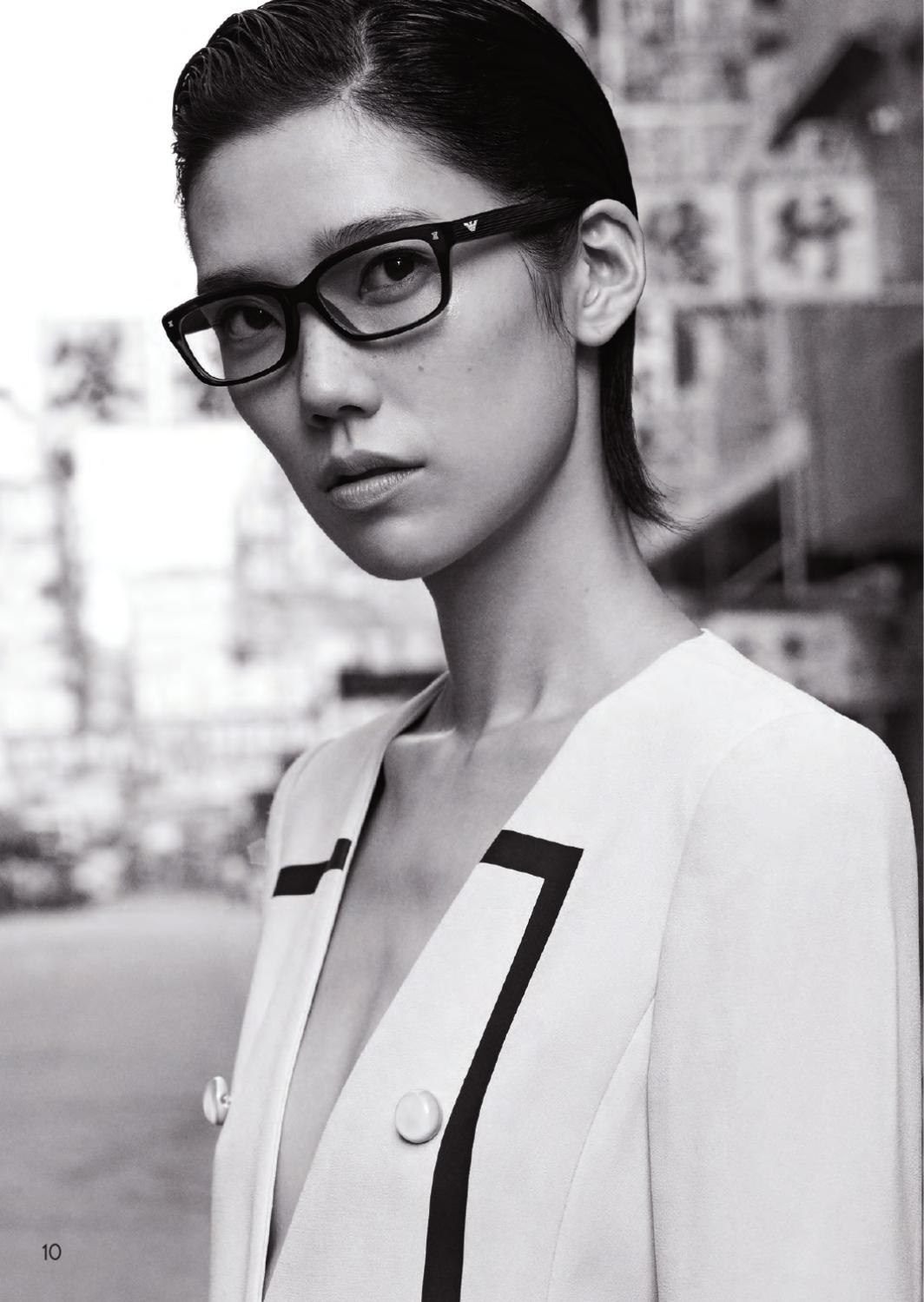
Tao Okamoto - Emporio Armani SS12
The Damier Canvas pattern has evolved from being a signature to being a part of Vuitton’s DNA. Although some may argue that there is a saturation of what was first considered to be a hyper exclusive signature, Vuitton continues to improve its brand image, despite moving away from the traditional notion that the rarer a luxury brand is, the more desirable it will become. Do CMOs at some of the world’s leading brands still consider exclusivity as a key component of their expansion strategies?  How does a brand like LV, which can be considered to be ‘saturated’ in the sense that it is available everywhere, remain being the most valuable brand in terms of its brand equity? Does niche targeting still work? A couple of years ago you wouldn’t talk about product positioning without mentioning niche targeting. One would feel that the 2008 financial crisis was partly responsible for this shift in mind set. I’ll explain. 

Interbrand - Lux Brand Equity 2002-2011
Brand equity is a brand’s value in monetary terms. Defining how much a brand’s equity is requires a lot of research which takes into account both quantitative and qualitative aspects of the brand’s environment. Interbrand is one company that has been able to capture brand equity accurately. Interbrand gives a detailed method of what it takes into consideration when calculating brand equity, to mention a few; authenticity, relevance, consistency, presence, clarity, and responsiveness among others. When you look at the chart of brand equity by luxury industry, you’ll see that since 2004, Vuitton’s growth in brand equity took off in an exponential manner. The other brands on this list are the ones that wanted to remain exclusive, ‘unsaturated’, under segmented, or to be known as simply ‘signature brands’. I for one am questioning the niche targeting strategy. I understand that it’s better to be known for one thing and to excel at it, but we live in a fast paced world! What business school graduates call the ‘learning curve’ is becoming more vertically straightened than ever; anybody can execute the exact same ‘signature’, and to make it worse, at an even lower cost price. 

Interbrand - Top Lux Brand Equity 2011
Niche targeting is dead! If you want to survive then evolve, adjust, learn continuously. Consumers are always curious, but consumers have more options now. Make your presence felt by occupying more than one product category. The influx of goods from low cost manufacturing destinations makes it harder for signature brands to survive. Instead, exclusivity must turn into personalization. Niche brands are always caught trying to satisfy their customers, forgetting that their customers’ purchasing decision making changes all the time. As an illustration, every brand at the moment is playing the environmentally friendly card. It’s time to rethink niche strategies because less exclusivity does not mean saturation. There are control mechanisms that a brand can apply.